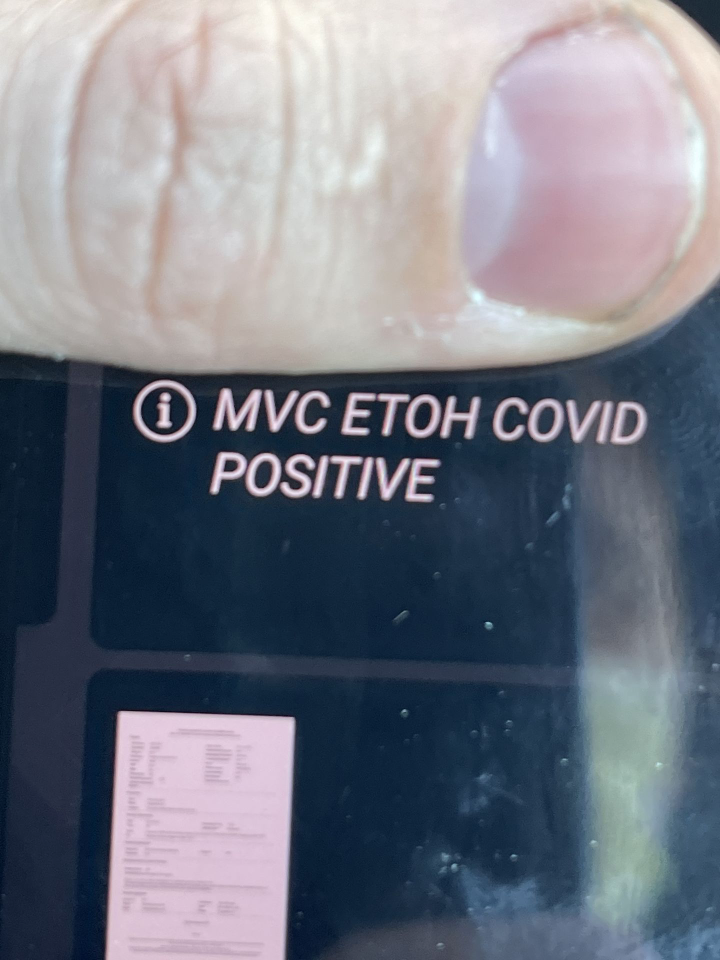
You never knew which call you were going to encounter COVID and it was safe to assume every call was a COVID call
There are periods in life that divide everything into “before” and “after.” For me, that line was drawn in 2020.
By then, I wasn’t a brand new EMT anymore. I’d been working in EMS since 2017. I knew chaos. I knew trauma. I knew what it felt like to walk into someone’s worst day and try to make it better. I thought I understood what this career demanded.
I didn’t.
During the height of the COVID 19 pandemic, I was working critical care transport in Baltimore while also running 911 calls in Calvert County, Maryland. Overtime wasn’t optional anymore. Surge transfers became routine. When I wasn’t moving critically ill patients between facilities or helping wherever the hospital needed hands, I was on an ambulance responding to emergencies because there was practically nobody else. The hospital I worked at was one of the largest in the state, and every hallway seemed to carry the same sound: alarms, ventilators, and exhausted staff trying to hold the line.
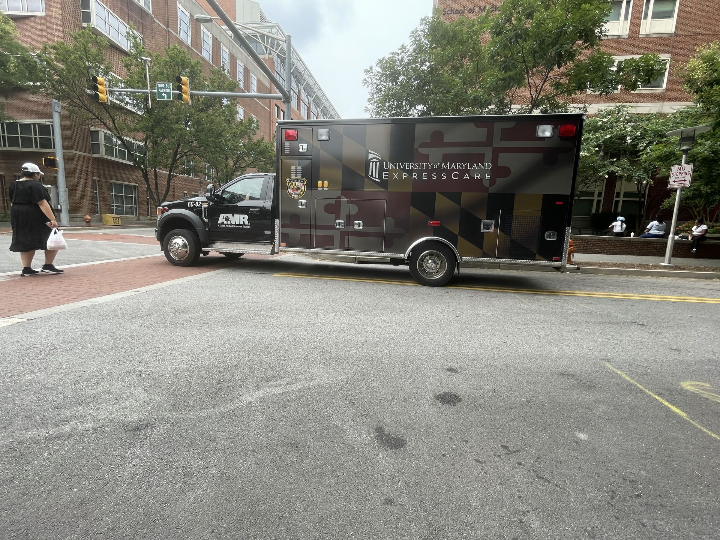
Another UMD Critical Care Ambulance leaving for a call
Nothing in school had prepared me for what I was seeing. Almost every patient I encountered was COVID positive. Many were intubated and connected to ventilators. At first, those machines were foreign to me. They weren’t part of my training. But the pandemic had little patience for what you were or weren’t supposed to know. We learned because we had to. Every shift forced us to adapt faster than we thought possible.
There wasn’t time to process any of it.
When one patient left the room, another arrived. Some recovered. Many didn’t. Faces blurred together, but the emotions never did. The weight of watching people struggle to breathe, of seeing families separated from loved ones, of witnessing death become so common that it threatened to feel routine, settled somewhere deep inside me.
Outside the hospital, life was supposed to offer relief. Instead, I went home to a newborn son.
Every morning before work, I worried about whether I would make it through another shift. Every evening, I worried about what I might bring back through my own front door. Before I held my son, I wondered if invisible particles on my clothes or skin could take his life. I disinfected everything. I scrubbed my hands until they cracked. I lived with the constant fear that the person I loved most in the world could become collateral damage simply because I had chosen this profession.
My son never got COVID.
For that, I will always be grateful.
But he still paid a price.
He didn’t get the version of his father that every child deserves. He got someone who came home emotionally hollow, carrying the sights and sounds of the hospital long after each shift had ended. Someone who had spent twelve or more hours surrounded by suffering before trying to become a husband and a father again the moment he walked through the door.
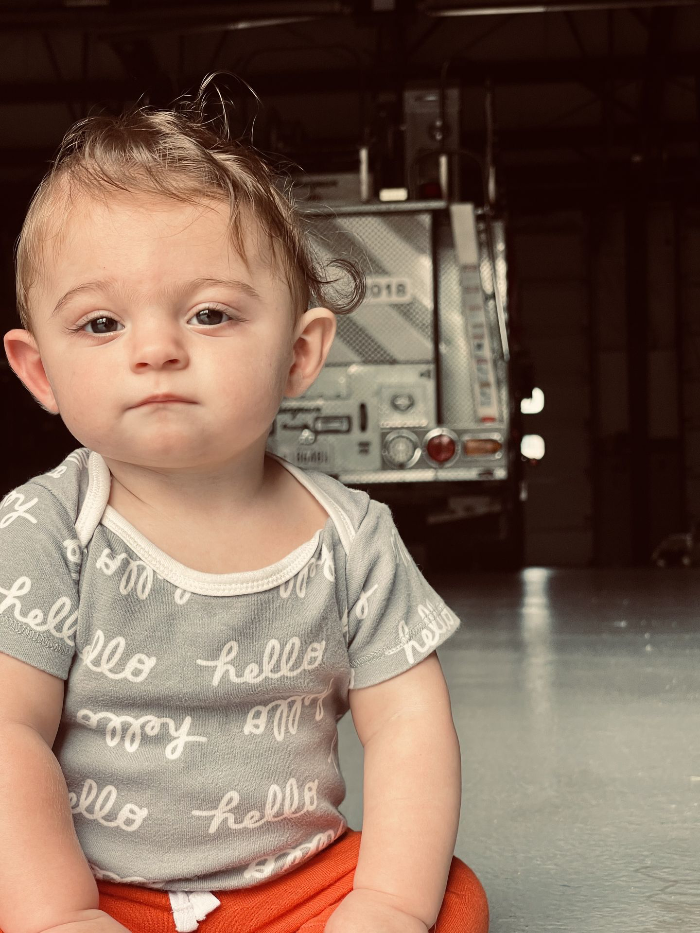
My son around March of 2021 visiting me during a 911 shift
Looking back now, “war torn” is the closest phrase I can find.
Not because I compare my experience to combat, but because there is something uniquely damaging about existing in a place where tragedy never seems to end. Every day brought another emergency. Another family saying goodbye through a screen. Another coworker pushed beyond exhaustion. Another reminder that no matter how hard we worked, we couldn’t save everyone.
I never kept count of how many patients I cared for.
People have asked me over the years, but I honestly don’t know. The number wouldn’t change anything. Every patient deserved to be treated like they were the only one that mattered. Turning them into statistics never felt right.
What I did keep was the emotional residue.
The pandemic eventually slowed. The surge units emptied. The ventilators became less common. The headlines moved on.
I didn’t.
The things I had seen stayed with me, quietly reshaping the way I slept, the way I reacted to stress, and the way I viewed the world. Eventually, those experiences contributed to a diagnosis of post traumatic stress disorder. Receiving that diagnosis didn’t surprise me. If anything, it gave a name to something I had been carrying long before I understood it.
Years later, I watched congressional hearings where Dr. Anthony Fauci was questioned about the government’s response to COVID 19. I watched politicians argue over masks, vaccines, lockdowns, and who deserved the blame. I listened as people debated the pandemic as though it were an abstract policy failure instead of a lived experience that had forever changed millions of people.
I couldn’t help but think about the patients.
The people gasping for air.
The families who never got to say goodbye.
The nurses who held phones so loved ones could say their final words.
The respiratory therapists who worked themselves to exhaustion.
The EMS crews who kept answering the next call because there was no one else to send.
Those memories don’t fit neatly into political narratives.
What troubles me even more is watching the country slowly forget what COVID taught us. As the years have passed, we’ve seen pandemic preparedness programs reduced or reorganized, public health agencies lose funding and personnel, and emergency response systems weakened in the name of politics, budgets, or simply moving on. It’s as if surviving the last pandemic convinced us there won’t be another.
History tells us otherwise.
Pandemics are not once in a century flukes. They are recurring events. Influenza, SARS, MERS, Ebola, COVID 19. Another one will come. The only question is whether we’ll be ready when it does.
Preparedness isn’t fear. It’s responsibility.
The stockpiles. The surveillance systems. The research. The training. The public health workforce. The hospital surge plans. None of those exist because someone wanted bigger government or more bureaucracy. They exist because healthcare workers stood in rooms where people died waiting for a treatment that didn’t exist yet. They exist because we learned those lessons the hardest way possible.
People often talk about healthcare workers as heroes during the pandemic.
The truth is much less dramatic.
We were scared.
We were exhausted.
We improvised.
We learned skills we never expected to need.
We cried in supply closets, sat in our cars after shifts wondering if we were bringing death home to our families, and then got up the next morning and did it all over again because someone had to.
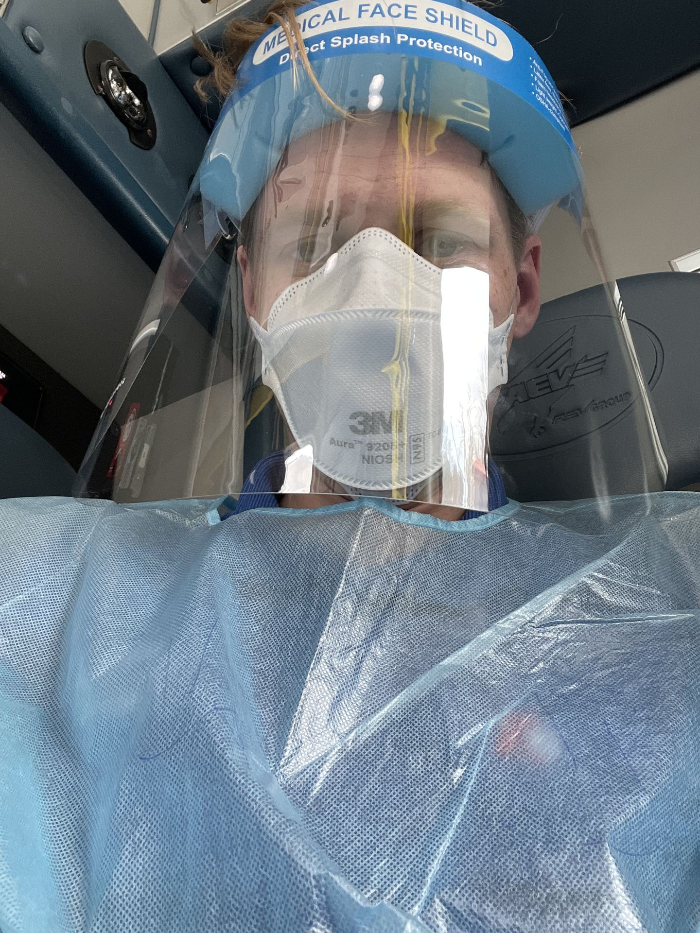
Me enroute to a Covid Positive patient
My fear is that when the next pandemic arrives, we’ll once again ask healthcare workers to sacrifice everything while giving them fewer resources than they had before.
The world remembers COVID 19 as a chapter in history, but for many of us, it isn’t history at all. It’s the reason some of us carry invisible scars that no one sees.
The pandemic ended.
For the rest of the world, life returned to normal.
For many of us who lived it from the inside, it never truly ended.
We simply learned how to carry it with us.
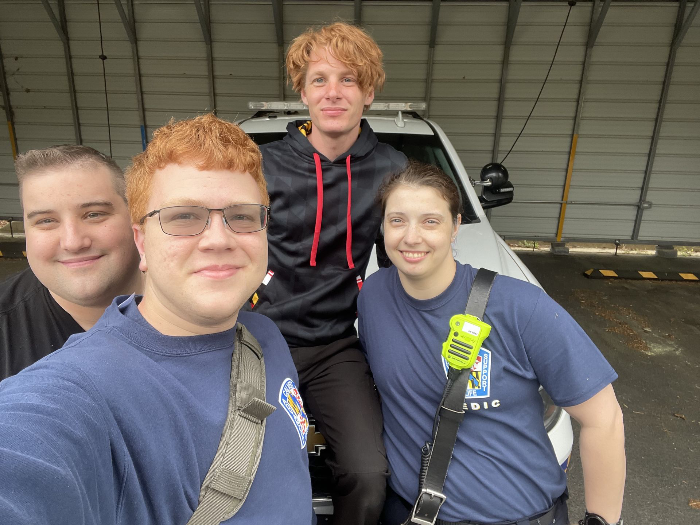
My 911 crew and I after my last shift in Maryland in 2022. These are the people that worked through the pandemic with me and got each other through everything.