
There are a handful of thoughts that continue coming back into my mind's eye, revolving in the space of my daily life like planets large and small that eclipse my focus when I'm doing routine tasks like laundry, cooking food, or cleaning my house.
There is the grief, of course. These are not new feelings to me. The things I've seen at home and abroad are depressing. I see it in the American healthcare system that abuses and exploits the most vulnerable who need the most help. I see it in our labor practices where my friends work such long hours that it impacts their ability to help patients. I see it in our neglect of veterans because we decided it was easier to elevate them to godhood than to care for them tangibly. I see it in our international dealings in the Levant where we have exported our mass-produced violence.
There are other sensations, too. There is a new pitch of desperation, but I recognize that the violence didn't begin with the murder of Renee Good or Alex Pretti; it was already here. It was here in our treatment of the unhoused. It was here in our legislation against immigrants. It was here when we armed our local law enforcement agencies with successively larger and more deadly tools year over year. It was here when we entertained the words of grifters, cheats, and talking heads funded by outside interests, corporate lobbyists, and foreign near-peer powers to cultivate exceptionalism and callousness. It was here when those same grifters, cheats, and talking heads downplayed the impact of tragedies like Columbine as hoaxes and isolated incidents, rather than symptoms of a society that breeds desperation and promotes violence at home and abroad. It was here when we harassed the Muslim community in the years after 2001. It was here when the construction of the Auraria Higher Education Center pushed the Spanish-speaking local community out of their homes to build a trio of schools that neither the displaced nor their children would ever tangibly benefit from. It was here during pushback against the Civil Rights Movement, when the Denver Metro Area sheltered and platformed the KKK. It was here when Denver was built on land that was seized from the husbandry of Indian Tribes.
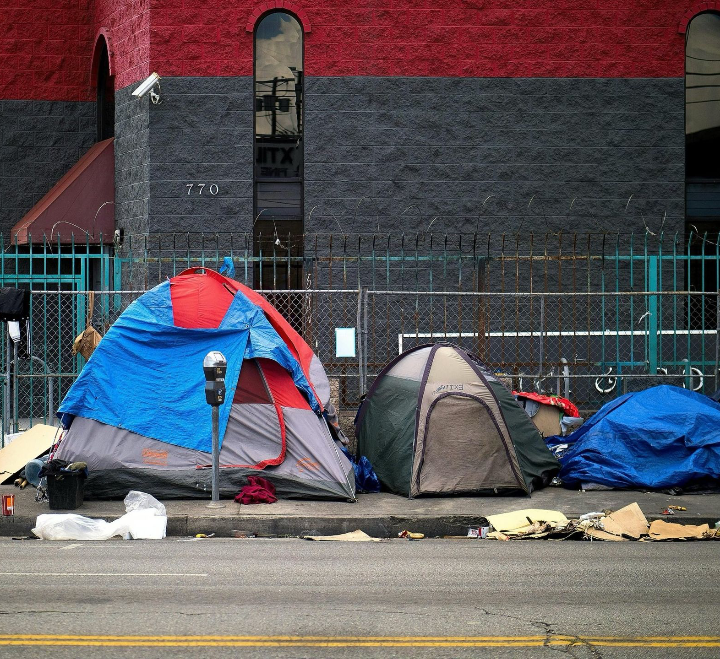
It has always been violence, all the way down, the entire time. Even here in Colorado and even in... whichever state you come from. You know your own stories. I know you have them, too. Some have more than others; it's not a race, it's just violence. These new murders in Minnesota, simply revealed to previously sheltered demographics, that the violence has the potential to affect every demographic. This, of course, changes things. Everything always seems to happen to "Them" until it happens to "Us".
There is also anger that exists alongside the grief. There is the indignation that this was allowed to happen; that people like my family voted for this and cheer whenever people are hurt. There is the anger at the people doing it—because it always is people. We can say they're monsters, we can dehumanize them to make them easier to resent, but these individuals are people. They are people, and that makes them all the more unpredictable, all the more frightening. If your neighbor is a monster, then in another world that could have been you, and that's a hard thing to reckon with, one's own capacity for hatred and evil.
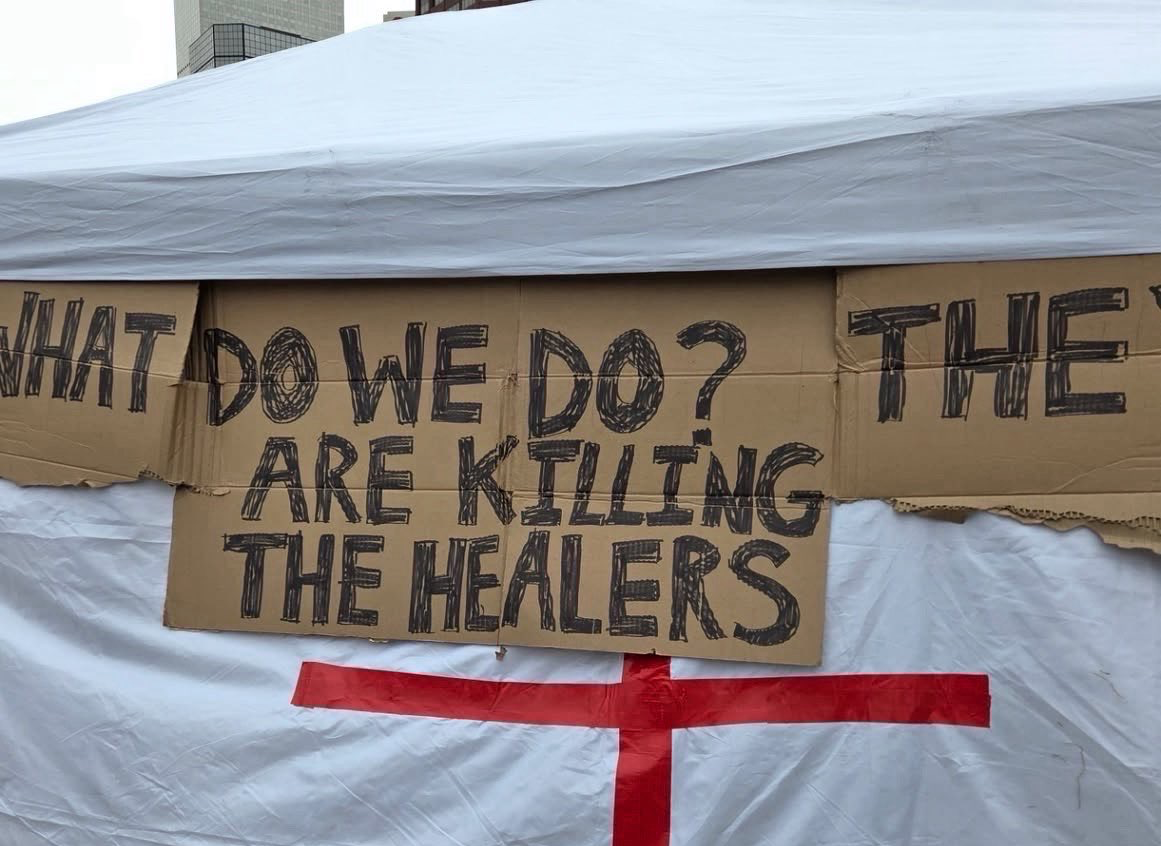
There is finally, the rage that a simple, oath-based desire to help all those who suffer (especially those that the state dislikes) is now an offense punishable by immediate summary execution.
If you are a healthcare provider, make no mistake: It will always be "Them" until it is "Us". It will always come back to "Us", eventually.
An odd feeling of relief and vindication sits within the grief and within the anger. Finally, people see themselves in the victims of violence by agents of the state. (I call them agents of the state, because I do not believe that it's possible to consider these particular sorts of murderers to be "police", as they do very little policing.)
For what little training standards exist for police forces in America, these clown-shirts are held to even less than that. Their brutality, their tactics, and their thorough incompetence when not committing gang-style executions of civilians, bystanders, and observers betrays their status as scarcely an echo of law enforcement. They enforce no laws; instead they breach them with apparent impunity. They're much more like slave-catching posses or brownshirts than the federal agents they pretend to be. They have to harass children and execute unarmed people to stroke their flaccid egos, and feel as though they are big strong men—"like Call of Duty. Pretty cool, huh?"
But people are finally seeing themselves in their victims.
It no longer feels like the violence is happening to "Them". It feels much more like the violence is happening to "Us". Every parent who sees Renee Good, killed after dropping off her children, can jarringly imagine themselves in such a situation. Every healthcare worker who sees Alex Pretti, forced to the ground and executed for trying to help another, is faced with the sudden, painful realization that it could be them.
It's happening to "Us". It's not happening to "Them". It's happening to YOUR mom, to YOUR dad, to YOUR husband, to YOUR wife, to YOUR aunt and uncle, to YOUR cousin, to YOUR daughter, to YOUR son. It is happening to YOU.
We cannot defeat this if we continue to believe that harm only ever comes to "Them". Harm will come to us and to ours, sooner than we ever thought possible; in fact it's already here—we only need to see a flicker of ourselves in the eyes of the people who are already in the ICE detention center in Aurora, CO.
That violence is already here; it isn't just ICE. It is nested deeply in your community. It is creeping through the online forums and stalking through your workplace and social events.
That violence proclaims, "it isn't happening to you, and it's not happening to someone you love, so it isn't your problem."
That violence proclaims, "killing people before they have a chance to be proven guilty in a court of law, isn't so bad."
That violence proclaims, "we need to eradicate them all."
That violence proclaims, "the people in my neighborhood don't matter, only the people living in my house."
That violence proclaims, "those around me are my enemy."
That violence proclaims, "everything that isn't like me is a threat to my life."
That violence proclaims, "your voice doesn't matter, only your ability to arm yourself."
And that violence only listens to power and money. It can be swayed any which way by those with enough of either.
In horrible times when we see ourselves in the victims of violence and oppression, it's simple to slip into violence. It's simple to slip into apathy. It's simple to slip into an accelerationist viewpoint, to just get it all over with. It's simple to believe that we need an apocalypse—the end of the world, a clean slate, a tabula rasa for a new utopia.
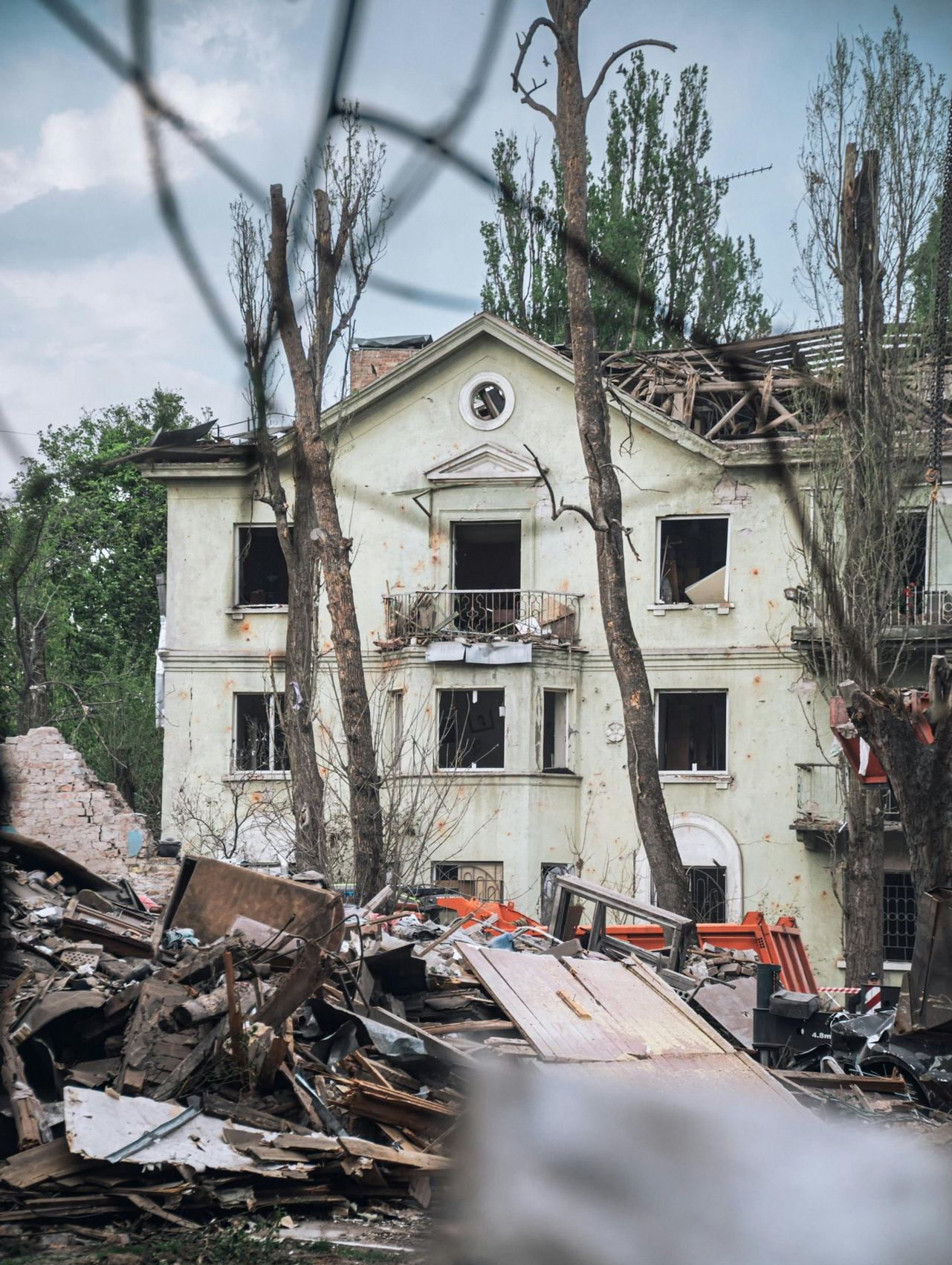
But a tabula rasa does not care about the people that died to make it possible It does not care about the people who do not survive the hunger, the displacement, and the inability to obtain medications. It spares no thought to those who lose their jobs in the inevitable industrial collapse, to those who lose precious family heirlooms or cherished records because armed soldiers took their homes, to those forced to flee on foot because to remain where they are simply isn't safe. Of course, that would happen to "Them"; it would never happen to "Me"... But the clean slate does not pay any mind to those who are left hungry, destitute, and disabled. After all, there is no homelessness in utopia, is there?
Total collapse is a fantasy, based on the privilege of the confidence that you are not someone who will be profoundly affected by the collapse; or if you are affected, that you die quickly in a blaze of glory. After all, losing everything and having to rebuild from scratch or dying because you can't access the medication you need to survive is something that happens to someone else.
We don't actually have that privilege. Virtually no one does. The lives we lead are so interconnected that we can't extricate life-saving measures from everything else, if everything else collapses—hell, the very existence of our grocery stores and the bounty they carry, is built upon various types of violence and exploitation.
Our task, then, is to see ourselves, our neighbors, and our loved ones in the goings-on of state violence. It is to know that it is "Us", and not "Them" under attack. We cannot simply respond to violence with more violence; instead we should respond with hope. Hope—not as a fragile or fickle thing, but as a tiny and wretched yet indomitable creature that climbs back to its feet with bruised knuckles and bloodied teeth, to try yet again to help others.
The Executive Branch, likely hopes that these murders will have knock-on effects—not strictly a chilling effect, nor strictly an escalatory one, but something between the two. They hope that people, in a panic, and fearful of what is to come, rush to defend themselves and in turn neglect their neighbors and forget to reach out to the communities that could give them aid. Power most fundamentally rests, not in weaponry or vehicles or armor, but in the collection, organization, and redistribution of resources. It sits most securely with those who can maintain a prolonged struggle; it stands with those who can outlast—those who feed, those who help, those who heal and uplift others.
So check in on your neighbors.
Get boots on the ground—involve yourself with polling, with local mutual aid in your area. If there isn't a mutual aid group near you then get like-minded friends together and start one.
Call your representatives—there are a myriad of resources for specific issues.
Get out and vote. Participate in canvassing if you can, and if you can't, encourage other people to vote and make their voices heard. At 70% voter turnout, the outcome nearly always leans towards the more progressive option; at 80% it's a landslide.
Attend a protest and join a group that organizes or supports them. There are many groups that are involved in the larger ones and you will be able to find one that fits your particular interests and concerns.
We can't always have perfection, but we can always be working towards improvements, even if they are slow. We protect each other, the most vulnerable among us, so that they can live long enough to see them. This is a matter of attrition: a marathon, not a sprint. If you can outlast the violent dictatorial regime that is actively self-immolating, then you will win by default. To preserve energy on survival by engaging in matters of scale—cooperating and pooling resources—is vital in such times. We must be patient, but we must put in the work, and we must care for each other so that we have the energy to continue that work.
Violence is the enemy.
Apathy is the enemy.
It is not happening to "Them". It is happening to "Us". It always was.